Swirl marks, oxidation, sanding marks, haze, and light scratches do not all require the same correction process. Using an aggressive product on every paint defect can remove more clear coat than necessary, while using a mild polish on a severe defect may produce little improvement.
Understanding the roles of rubbing compounds and polishing compounds helps automotive professionals choose a more appropriate correction process.
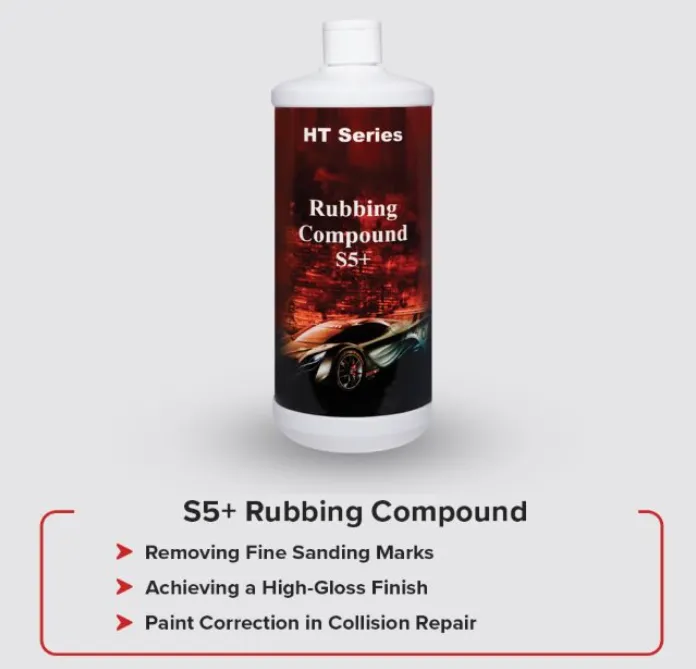
Rubbing Compound Provides Greater Cutting Action
A rubbing or cutting compound is generally designed to remove more substantial surface defects than a finishing polish.
Depending on product formulation, pad selection, machine, technique, and paint characteristics, a compound may be used for defects such as
- Noticeable swirl marks
- Oxidation
- Sanding marks
- Heavier paint imperfections
- Certain correctable scratches
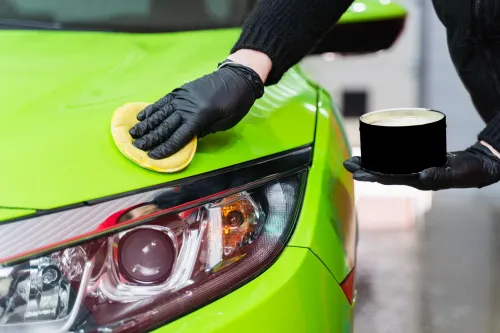
Compounding works by removing a very small amount from the upper paint surface to level defects within the correctable layer.
This is why paint correction should be approached carefully.
Polishing Focuses More on Refinement
Polishing compounds are generally less aggressive and are often used to improve clarity and gloss while addressing lighter imperfections.
After a heavy cutting stage, polishing may help refine haze or micro-marring left by the compound and pad combination.
On vehicles with relatively minor defects, polishing alone may provide the desired improvement without requiring a heavy cutting stage.
Do a Test Section Before Correcting the Entire Car
A test section is one of the most useful practices in professional paint correction.
Choose a representative area and begin with a reasonable combination of machine, pad, and product. Inspect the result under appropriate lighting.
If the defect remains, the process can be adjusted.
If a mild combination achieves the required result, there is no reason to automatically move to a more aggressive method.
This approach helps preserve paint while reducing unnecessary work.
Pad Selection Changes Product Behaviour
Correction performance is not determined by liquid compound alone.
Pads can vary in material, density, cut, finishing ability, and intended machine type. The same compound may behave differently with different pads.
Machine type, operating technique, pressure, working time, panel temperature, and paint hardness also influence the result.
For this reason, comparing compounds only by product labels can oversimplify paint correction.
Some Scratches Should Not Be Chased
Not every scratch can or should be polished away.
A deep scratch extending beyond the safely correctable paint layer may require touch-up or refinishing rather than aggressive machine correction.
Automotive workshops should recognise when polishing has reached a sensible limit.
Where paint thickness is uncertain, appropriate assessment becomes especially important.
Consider the Refinishing Environment
Automotive refinishing workshops may use compounds after sanding or paintwork to restore gloss, while detailing studios may use correction products on original or previously refinished paint.
These are related but not identical applications.
Professionals purchasing polishing compounds in Pune should therefore consider the type of work being performed rather than simply selecting a universal compound.
Relevant questions include
- Is the product for detailing or post-refinish polishing?
- What defect needs to be removed?
- What machine will be used?
- Which pads are available?
- What finish is expected?
- Is a second refinement stage planned?
Cost Per Bottle Is Not the Only Consideration
For professional users, product value also depends on working characteristics.
A cheaper compound that requires repeated passes, creates excessive dust, or needs substantial refinement may not necessarily reduce the overall job cost.
Technician time, product consumption, pad usage, cleanup, and finish quality all influence practical value.
For detailing studios, garages, and paint specialists across Pune, Maharashtra, suppliers such as S T Sales can provide access to automotive detailing and refinishing product categories suited to different workshop applications.
The right correction product is ultimately the one matched to the defect and process.
Rather than deciding between compound and polish by habit, inspect the paint, perform a controlled test section, evaluate the result, and use the least aggressive method capable of achieving the agreed finish.
Keywords