Automotive refinishing requires multiple products to work together through preparation, repair, painting, correction, and final finishing. Choosing the right Car Refinishing Products can help body shops and paint professionals maintain consistent processes while reducing material waste and avoidable rework.
For automotive garages, body shops, dealerships, paint specialists, and vehicle customization businesses in Pune, Maharashtra, buying refinishing materials should therefore involve more than comparing individual product prices.
Identify Your Workshop's Regular Refinishing Jobs
The right product range depends on the type of vehicles and repairs a workshop handles most frequently.
A body shop focused on accident repairs may have different requirements from a facility specializing in cosmetic restoration or vehicle customization.
Common jobs include:
- Scratch repairs
- Bumper refinishing
- Dent repair
- Single-panel painting
- Accident-damaged panel restoration
- Replacement panel refinishing
- Full-body repainting
- Paint correction
Reviewing regular job types helps workshops avoid purchasing products that do not match their actual workflow.
Build the Product Range Around the Process
Car refinishing is a sequence rather than a single painting step.
Depending on the repair, professionals may require:
Surface preparation products
Used to clean and prepare the substrate before repair work begins.
Abrasives
Used during defect removal, filler shaping, primer preparation, and finishing.
Body repair materials
Used where dents, imperfections, or damaged surfaces require correction.
Primers
Create an appropriate foundation for subsequent coating stages.
Automotive paint
Provides the required colour and visual effect.
Clearcoat
Creates the transparent outer finish in many modern refinishing systems.
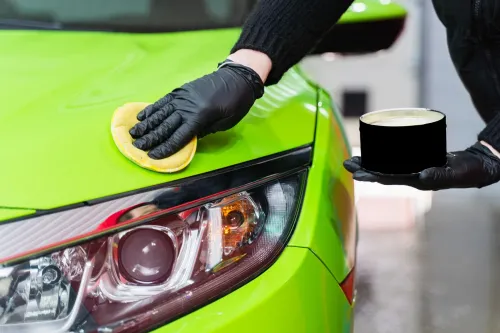
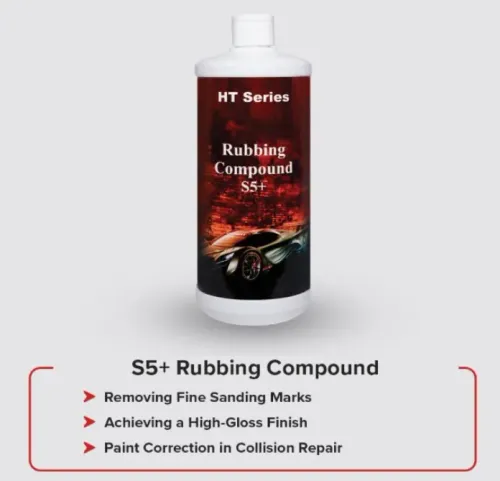
Compounds and polishes
Used where suitable final correction and refinement are required.
Thinking about these categories as a connected system makes purchasing more organized.
Check Product Compatibility
One of the most important purchasing considerations is compatibility.
Individually suitable products may not necessarily perform correctly when combined without following technical requirements.
For example, primers, basecoats, clearcoats, hardeners, and reducers may have specific compatibility and mixing requirements.
Incorrect combinations can contribute to:
- Adhesion problems
- Uneven curing
- Loss of gloss
- Surface defects
- Colour inconsistencies
- Premature coating failure
- Additional rework
Professional workshops should follow the relevant technical information rather than assuming materials can always be mixed across different systems.
Do Not Compromise on Surface Preparation
Many refinishing failures begin before paint application.
Grease, silicone, dust, rust, unstable previous paint, and poorly prepared filler can affect the layers applied afterward.
Workshops should maintain suitable products for cleaning, degreasing, sanding, masking, and surface preparation.
A properly prepared surface makes it easier for technicians to achieve consistent results during subsequent stages.
Trying to reduce preparation time can create significantly more work after painting.
Select Abrasives Systematically
Using an abrasive simply because it is available in the workshop can create unnecessary problems.
Different abrasive grades have specific roles.
An excessively coarse abrasive can leave deep marks, while moving to a very fine grade too quickly may fail to remove marks created during the previous stage.
A planned abrasive progression can help technicians achieve the required surface condition with less unnecessary work.
Organizing abrasives by application and grade also reduces mistakes when multiple technicians share the same refinishing area.
Evaluate Masking Materials Carefully
Masking is sometimes treated as a minor consumable, but poor masking can increase labour and affect finish quality.
Suitable materials help protect surrounding panels, glass, trims, rubber parts, and other areas during sanding or spraying.
Professional buyers should consider:
- Adhesion
- Clean removal
- Surface compatibility
- Required masking duration
- Workshop temperature
- Refinishing application
Reliable masking can reduce overspray cleanup and unnecessary finishing work.
Compare Cost Per Completed Repair
Buying Car Refinishing Products based only on package price can be misleading.
The real cost depends on how efficiently the material performs during actual jobs.
Consider factors such as:
- Coverage
- Mixing ratio
- Material consumption
- Number of required coats
- Drying time
- Application efficiency
- Wastage
- Technician time
- Rework requirements
- Finished quality
A product with a higher initial price may sometimes offer better usable value if it improves coverage or reduces repeat work.
Standardize Frequently Used Products
A workshop that constantly changes products can make technician training and quality control more difficult.
Standardizing suitable frequently used materials can help teams become familiar with application characteristics, working times, mixing procedures, and finishing behaviour.
It can also simplify inventory management.
Workshops can more easily identify which materials are used quickly, maintain appropriate stock levels, and reduce unnecessary purchases.
Check Storage Requirements
Automotive refinishing products need appropriate storage.
Temperature, moisture, contamination, shelf life, and container sealing can affect certain materials.
Workshops should organize stock so older usable products are identified appropriately and incompatible materials are stored according to applicable requirements.
Poor inventory control can create unnecessary waste even when good-quality products are purchased.
Choose a Supplier Based on Workshop Needs
Professional buyers should evaluate the supplier as carefully as the individual products.
Important considerations can include:
- Relevant automotive product range
- Product authenticity
- Consistency of availability
- Suitable supporting materials
- Technical product information
- Understanding of refinishing applications
S T Sales supplies automotive detailing and refinishing solutions for professional users in Pune, supporting different stages of vehicle surface preparation, painting, correction, and finishing.
Selecting Car Refinishing Products as part of a complete workshop system can make purchasing more efficient and refinishing processes easier to control. The strongest product range is not necessarily the largest one; it is the range that matches regular repair work, supports compatibility, reduces unnecessary variation, and helps technicians achieve consistent professional results.
Keywords