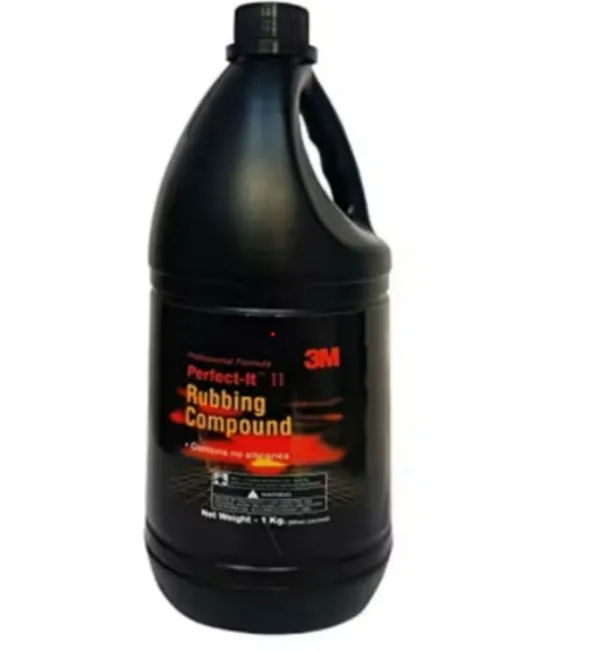
Automotive paint gradually develops imperfections due to regular washing, environmental exposure, minor abrasion, oxidation, sanding during refinishing, and everyday vehicle use. When these defects affect the clarity and appearance of the finish, 3M Rubbing Compound can be used as part of a professional paint-correction process.
For detailing studios, automotive body shops, garages, and refinishing professionals in Pune, Maharashtra, the key is knowing when compounding is actually required. Using an aggressive correction process unnecessarily can remove more clear coat than needed and create additional finishing work.
What a Rubbing Compound Does
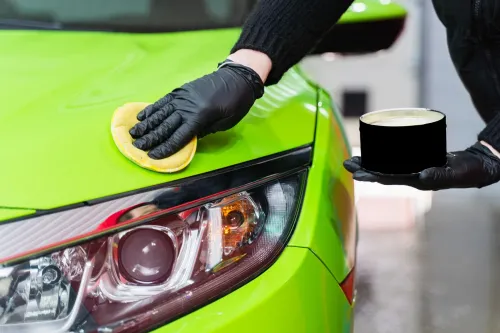
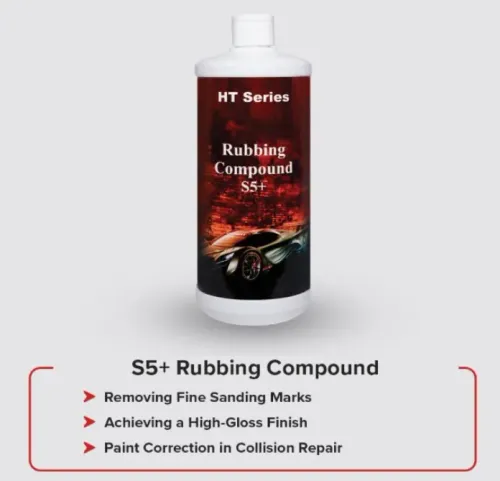
Rubbing compound is an abrasive product designed to provide controlled paint correction.
Rather than filling defects temporarily, an appropriate compounding process works by refining a small amount of the upper painted surface to reduce certain visible imperfections.
Depending on the paint system, product, and severity of the defect, compounding may be considered for:
- Oxidized paint
- Sanding marks
- Moderate swirl marks
- Paint haze
- Refinishing imperfections
- Loss of surface clarity
- Certain light surface defects
Not every scratch can be safely removed through compounding. Deeper damage may require a different repair approach.
Inspect the Paint Before Compounding
The first step should always be assessment.
Under suitable inspection lighting, technicians can identify whether defects are superficial, correctable, or too deep for safe polishing.
It is also useful to understand whether a panel has previously been repainted or heavily corrected.
Where appropriate, professional detailers may use paint-thickness measurements to gather additional information before performing substantial correction.
The objective is not to remove every possible mark at any cost. It is to improve the finish while preserving as much of the paint system as reasonably possible.
Compound and Polish Are Not the Same
Although the terms are sometimes used interchangeably, rubbing compounds and finishing polishes generally perform different functions.
A compound usually provides stronger cutting action.
A finishing polish typically performs finer correction and refinement to improve gloss and clarity.
A professional workflow may therefore follow this sequence:
Inspection → Compounding → Refinement → Protection
However, the process should always be adapted to the vehicle.
Paint with only light defects may not require a heavy correction stage at all.
Match the Compound With the Correct Pad
The compound itself is only one part of the correction system.
Pad selection has a major influence on the level of cut and the final finish.
Technicians may choose different pad characteristics depending on the paint condition and required correction.
Other important factors include:
- Machine type
- Machine speed
- Working pressure
- Paint hardness
- Product quantity
- Working area
- Pad condition
- Technician technique
An aggressive compound combined with an aggressive pad may be excessive for lightly marked paint.
Starting with a test area allows the technician to evaluate the result before working across the entire vehicle.
Avoid Excessive Product
Using more rubbing compound does not automatically improve correction.
Too much product can make the working process inefficient and may create unnecessary residue.
Professional technicians should use an appropriate quantity based on the compound, pad, machine, and working area.
Pads should also be monitored during the job.
A heavily loaded or contaminated pad may behave differently from a clean one and can reduce correction consistency.
Control Heat During Machine Correction
Machine polishing generates heat through friction.
Excessive heat can become a concern, particularly around edges, body lines, previously repaired surfaces, and sensitive painted areas.
Technicians should avoid holding the machine unnecessarily in one position and should adjust their approach according to the panel.
Correct machine movement, pressure, speed, and working time all contribute to controlled correction.
Follow With Refinement When Required
After compounding, the surface should be inspected again.
Depending on the paint, pad, compound, and correction level, a finer polishing stage may be necessary.
Refinement can help improve:
- Surface clarity
- Gloss
- Depth
- Finish consistency
- Appearance under direct lighting
This stage is particularly important when working on darker colours where fine haze or polishing marks can be easier to notice.
Do Not Use Compound to Solve Every Scratch
One of the most important professional decisions is knowing when to stop.
A scratch that penetrates deeply into the coating system may not be suitable for complete removal through polishing.
Trying repeatedly to eliminate a deep defect can unnecessarily reduce surrounding clear coat.
In such cases, reducing the visibility of the defect may be safer than attempting complete correction. Some damage may instead require localized paint repair or professional refinishing.
Protect the Corrected Finish
After paint correction and refinement, suitable surface protection can help maintain the improved appearance.
Depending on the customer's requirements, this may involve a sealant, ceramic coating, paint protection film, or another compatible protection system.
The surface should be appropriately prepared before protection is applied so polishing oils or residues do not interfere with subsequent products.
Build a Consistent Correction Process
Commercial detailing businesses benefit from using a repeatable system rather than changing the correction method for every job without assessment.
S T Sales supplies automotive detailing and refinishing solutions for professional users in Pune, including products relevant to paint correction, polishing, surface preparation, and protection.
3M Rubbing Compound can be an effective part of professional paint correction when it is selected according to the actual defect. Careful inspection, appropriate pad selection, controlled machine technique, final refinement, and suitable protection are what turn compounding into a complete professional process.
Keywords